Biomolecular Engineering Lab

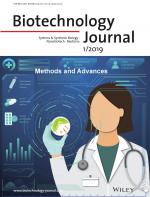
Barbosa, AJM, Roque ACA.  2019.  Free Marine natural products databases for biotechnology and bioengineering. Biotechnology Journal. -(-):-. AbstractWebsite

Marine organisms and microorganisms are a source of natural compounds with unique chemical features. These chemical properties are useful for the discovery of new functions and applications of Marine Natural Products (MNP). To extensively exploit the potential implementations of MNPs, they are gathered in chemical databases consenting their study and screening for applications of biotechnological interest. However, classification of MNPs is currently poor in generic chemical databases. The present availability of free‐access focused MNPs databases is scarce and the molecular diversity of these databases is still very low when compared to paid‐access ones. In this review paper, the current scenario of free‐access MNP databases is presented as well as the hindrances involved in their development, mainly compound dereplication. Examples and opportunities on using freely accessible MNP databases in several important areas of biotechnology are also assessed. The scope of this paper is as well to notify the latent potential of these information sources for the discovery and development of new MNPs in biotechnology, and push future efforts to develop a public domain MNP database freely available for the scientific community.

New publication about marine natural products' databases

Marine organisms and microorganisms are a source of natural compounds with unique chemical features applied in several areas like, drug discovery, cosmetics, materials and production of biofuels.

New marine natural products are discovered every day and access to information about these molecules should be organized and free-access for better exploitation.

Summer job shadowing

We had for the last 2 weeks, 1st to 12th of July, Carolina Spencer in our Lab, a high school student that chose to take 2 weeks of her vacation doing job shadowing with our scientists. Carolina spend every mornig in our lab helping and following a different researcher. During this time she had the opportunity to meet several researchers and students with different academic backgrounds and different projects. She has 17 years and just finished the 11º year.

Fernandes, C, Pina AS, Barbosa AJM, Padrão I, Duarte F, Andreia C, Teixeira S, Alves V, Gomes P, Fernandes TG, Dias AMGC, Roque ACA.  2019.  Affinity‐triggered assemblies based on a designed peptide‐peptide affinity pair. Biotechnology Journal. -(-):-. AbstractWebsite

Affinity‐triggered assemblies rely on affinity interactions as the driving force to assemble physically‐crosslinked networks. WW domains are small hydrophobic proteins binding to proline‐rich peptides that are typically produced in the insoluble form. Previous works attempted the biological production of the full WW domain in tandem to generate multivalent components for affinity‐triggered hydrogels. In this work, an alternative approach was followed by engineering a 13‐mer minimal version of the WW domain that retains the ability to bind to target proline‐rich peptides. Both ligand and target peptides were produced chemically and conjugated to multivalent polyethylene glycol, yielding two components. Upon mixing, they together form soft biocompatible affinity‐triggered assemblies, stable in stem cell culture media, and displaying mechanical properties in the same order of magnitude as for those hydrogels formed with the full WW protein in tandem.

New publication about affinity-triggered hydrogels

Our last publication from Cláudia Fernandes, Ana Pina, Arménio Barbosa, Inês Padrão, Margarida Dias and Cecília Roque, together with collaborators from LAQV - FCT NOVA, LEAF from ISA and Department of Bioengineering and iBB – Institute for Bioengineering and Biosciences from IST, was published in Biotechnology Journal.

NOVA STEAM Academy

The 1st edition of NOVA STEAM (STEAM - Sicience TEchnolog Arts Mathematics) Academy from FCT NOVA finished with great enthusiasm. 

Great gathering at the IUPAC 2019 in Paris

Cecília Roque was invited speaker at the International Union of Pure and Applied Chemistry (IUPAC) Conference 2019 in Paris, France, that took place on 5-12 July. Together with the 50th IUPAC General Assembly and the 47th IUPAC World Chemistry Congress, this conference was held to celebrate the IUPAC 100th anniversary.

Cecília participated in the session 'The International Younger Chemists Network: Shaping the Future Worldwide' and it was a great to be part of the IUPAC centenary celebration together with such an inspiring group of young scientists.

Participation at the Ciencia 2019

We were a full day, on the 9th of July, at Ciencia 2019 meeting in Lisbon meeting scientists and learning more about the science made in Portugal. 

Affinity 2019 Conference

In June we were 3 days in Stockholm - June 26 to 28th - discussing affinity technology, molecular recognition and its application in industry at the Affinity 2019 Conference.

Rita Oliveira, Gonçalo Teixeira and Cecília Roque presented their work at the poster session and Manuel Matos gave a talk about 'Purification platform for antibodies & antibody based-fragments based on a de novo designed affinity adsorbent'.

New publications about SCENT project

Two papers were published related to SCENT project and our E-noose methodology to distinguish odours. Early this year, on February, Gonçalo Santos and Ana Carolina Pádua were both in Prague to attend the Biodevices 2019 Conference and the Proceedings of the 12th International Joint Conference on Biomedical Engineering Systems and Technologies were now released.

Santos, G, Alves C, Pádua AC, Palma S, Gamboa H, Roque ACA.  2019.  An Optimized E-nose for Efficient Volatile Sensing and Discrimination. Proceedings of the 12th International Joint Conference on Biomedical Engineering Systems and Technologies - Volume 1: BIODEVICES. , Prague, Czech Republic AbstractPDF

Electronic noses (E-noses), are usually composed by an array of sensors with different selectivities towards classes of VOCs (Volatile Organic Compounds). These devices have been applied to a variety of fields, including environmental protection, public safety, food and beverage industries, cosmetics, and clinical diagnostics. This work demonstrates that it is possible to classify eleven VOCs from different chemical classes using a single gas sensing biomaterial that changes its optical properties in the presence of VOCs. To accomplish this, an in-house built E-nose, tailor-made for the novel class of gas sensing biomaterials, was improved and combined with powerful machine learning techniques. The device comprises a delivery system, a detection system and a data acquisition and control system. It was designed to be stable, miniaturized and easy-to-handle. The data collected was pre-processed and features and curve fitting parameters were extracted from the original response. A recursive feature selection method was applied to select the best features, and then a Support Vector Machine classifier was implemented to distinguish the eleven distinct VOCs. The results show that the followed methodology allowed the classification of all the VOCs tested with 94.6% (± 0.9%) accuracy.

Padua, A, Gruber J, Gamboa H, Roque ACA.  2019.  Impact of Sensing Film’s Production Method on Classification Accuracy by Electronic Nose. Proceedings of the 12th International Joint Conference on Biomedical Engineering Systems and Technologies - Volume 1: BIODEVICES. , Prague, Czech Republic AbstractPDF

The development of gas sensing materials is relevant in the field of non-invasive biodevices. In this work, we used an electronic nose (E-nose) developed by our research group, which possess versatile and unique sensing materials. These are gels that can be spread over the substrate by Film Coating or Spin Coating. This study aims to evaluate the influence of the sensing film spreading method selected on the classification capabilities of the E-nose. The methodology followed consisted of performing an experiment where the E-nose was exposed to 13 different pure volatile organic compounds. The sensor array had two sensing films produced by Film Coating, and other two produced by Spin Coating. After data collection, a set of features was extracted from the original signal curves, and the best were selected by Recursive Feature Elimination. Then, the classification performance of Multinomial Logistic regression, Decision Tree, and Naíve Bayes was evaluated. The results showed that both s preading methods for sensing film’s production are adequate since the estimated error of classification was inferior to 4 % for all the classification tools applied.

Last conferences attended: Gordon and ISOEN 2019

We have been busy traveling and participating in internatinal conferences this last month.

First Cecília Roque went together with Carina Esteves and Ana Pina to the Gordon Research Conference on "Self-Assembly and Supramolecular Chemistry" at Les Diablerets, Switerzland.


Expo FCT 2019, mais um ano a abrir as portas aos alunos do ensino secundário

Estivemos mais uma vez, no dia 24 de Abril, a participar na EXPO FCT 2019

Congratulations to Beatriz Santos that completed succefully her Master Degree

Last month, Beatriz Santos completed her Master's Degree in Chemical and Biochemistry Engineering with the thesis "Optimization of Sensing Materials for Gas Detection". In addition to Professor Cecília Roque, the jury was attended by Professor Mario Eusébio and Researcher Nídia Almeida.

Our last publication about 'Intelligent gelatin' has been in the media

Our new publication published in Materials Today this month was mentioned in several media news.

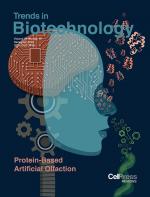
The paper showed that gelatin can be more than food. For the first time, it was shown an example of soft matter in artificial olfaction, where engineered gelatin materials combined with artificial intelligence tools were used to mimic the sense of olfaction.

Batalha, IL, Lychko I, Branco RJF, Iranzo O, Roque ACA.  2019.  β-Hairpins as peptidomimetics of human phosphoprotein-binding domains. Organic & Biomolecular Chemistry. 17:3996-4004. AbstractWebsite

Phosphoprotein-binding domains interact with cognate phosphorylated targets ruling several biological processes. The impairment of such interactions is often associated with disease development, namely cancer. The breast cancer susceptibility gene 1 (BRCA1) C-terminal (BRCT) domain is involved in the control of complex signaling networks of the DNA damage response. The capture and identification of BRCT-binding proteins and peptides may be used for the development of new diagnostic tools for diseases with abnormal phosphorylation profiles. Here we show that designed cyclic β-hairpin structures can be used as peptidomimetics of the BRCT domain, with high selectivity in binding to a target phosphorylated peptide. The amino acid residues and spatial constraints involved in the interaction between a phosphorylated peptide (GK14-P) and the BRCT domain were identified and crafted onto a 14-mer β-hairpin template in silico. Several cyclic peptides models were designed and their binding towards the target peptide and other phosphorylated peptides evaluated through virtual screening. Selected cyclic peptides were then synthesized, purified and characterized. The high affinity and selectivity of the lead cyclic peptide towards the target phosphopeptide was confirmed, and the possibility to capture it using affinity chromatography demonstrated. This work paves the way for the development of cyclic β-hairpin peptidomimetics as a novel class of affinity reagents for the highly selective identification and capture of target molecules.

Esteves C, Santos GMC, Alves C, Palma S, Porteira AR, Filho J, HA C, Alves VD, Faustino BMM, Ferreira I, Gamboa H, Roque ACA.  2019.  Effect of film thickness in gelatin hybrid gels for artificial olfaction. Materials Today Bio. 1:-. AbstractPDFWebsite

Artificial olfaction is a fast-growing field aiming to mimic natural olfactory systems. Olfactory systems rely on a first step of molecular recognition in which volatile organic compounds (VOCs) bind to an array of specialized olfactory proteins. This results in electrical signals transduced to the brain where pattern recognition is performed. An efficient approach in artificial olfaction combines gas-sensitive materials with dedicated signal processing and classification tools. In this work, films of gelatin hybrid gels with a single composition that change their optical properties upon binding to VOCs were studied as gas-sensing materials in a custom-built electronic nose. The effect of films thickness was studied by acquiring signals from gelatin hybrid gel films with thicknesses between 15 and 90 μm when exposed to 11 distinct VOCs. Several features were extracted from the signals obtained and then used to implement a dedicated automatic classifier based on support vector machines for data processing. As an optical signature could be associated to each VOC, the developed algorithms classified 11 distinct VOCs with high accuracy and precision (higher than 98%), in particular when using optical signals from a single film composition with 30 μm thickness. This shows an unprecedented example of soft matter in artificial olfaction, in which a single gelatin hybrid gel, and not an array of sensing materials, can provide enough information to accurately classify VOCs with small structural and functional differences.

Cecília Roque and Manuel Matos at the ACS Meeting in Orlando, USA, April 2019

In April Cecília Roque and Manuel Matos crossed the Atlantic to attend the 257th American Chemical Society (ACS) National Meeting & Exposition: 'Chemistry for New Frontiers' in Orlando, USA.