Biomolecular Engineering Lab

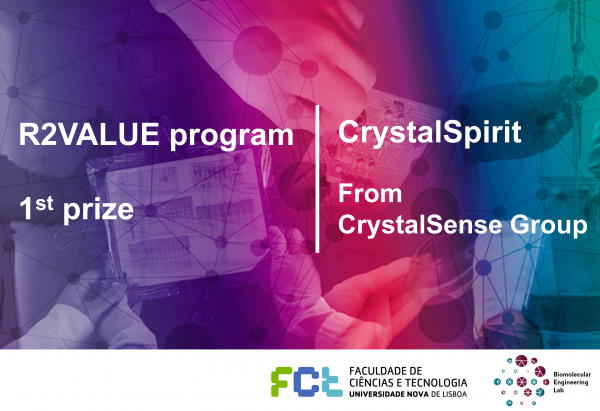
1st prize in R2Value from FCT NOVA

Our lab participated in the FCT NOVA R2Value - Research to Value Innovative Initiative with 2 different projects. Congratulations to both ScaffPep & CrystalSense teams for the excellent work, and well done to CrystalSense for getting the 1st Prize!
Check the news: https://bit.ly/3facjo3

Congrats on your PhD viva, Carolina Pádua

Carolina Pádua just defended her PhD viva and is the most recent Doctor coming from our group!
 

Portugal Campus Party

Cecília Roque is an ambassador and speaker of the 1st edition of Portugal Campus Party. This exciting event is the perfect place to hear about innovation & technology, exchange of ideas, jobs and networking for young entrepreneurs around the world.
Visit Portugal Campus Party between the 9-11 July in a free digital concept.

Congratulations, Rita Ramos

Congratulations to Rita Ramos for the great presentation and discussion of her Bachelor's Project in Biochemistry, entitled "Production and purification of an affinity ligand discovered through in vitro combinatorial libraries", supervised by Prof. Cecília Roque and Manuel Matos, MSc. We wish you the best for your future!

dos Santos, R, Iria I, Manuel AM, Leandro AP, Madeira CAC, Gonçalves J, Carvalho AL, Roque ACA.  2020.  Magnetic Precipitation: A New Platform for Protein Purification. Biotechnology Journal. 15(9):2000151.
Fernandes, CSM, Rodrigues AL, Alves VD, Fernandes TG, Pina AS, Roque ACA.  2020.  Natural multimerization rules the performance of affinity-based physical hydrogels for stem cell encapsulation and differentiation. Biomacromolecules. 8(21):3081–3091.

New papers are out

Our new papers are out!

"Natural multimerization rules the performance of affinity-based physical hydrogels for stem cell encapsulation and differentiation", by Cláudia S. M. Fernandes, André L. Rodrigues, Vitor D. Alves, Tiago G. Fernandes, Ana Sofia Pina and Ana Cecília A. Roque in https://doi.org/10.1021/acs.biomac.0c00473

New video!

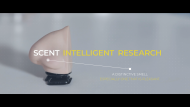
To make our challenging ERC-funded SCENT Project better known, a fantastic video was produced and spread through our social channels.

Congrats, Dr. Raquel dos Santos!

Many congratulations to Dr. Raquel dos Santos, that successfully defended her PhD work last friday afternoon (05.06.2020).

Her thesis is entitled "Developing non-chromatographic strategies for biopharmaceuticals purification", supervised by Dr. Ana Luísa Carvalho and Prof. Cecília Roque. 

SCENT project in NOVA Science magazine

Our group is present in the new edition of NOVA Science magazine. Learn about the #SCENT_project, funded by the European Research Council, in the page 64 (page 33 of the pdf). Download: https://bit.ly/NOVAScience2019pdf

Roque, ACA, Pina AS, Azevedo AM, Aires-Barros R, Jungbauer A, Profio DG, Heng JYY, Haigh J, Ottens M.  2020.  Anything but Conventional Chromatography Approaches in Bioseparation. Biotechnology Journal. (e1900274):1-8.

Congratulations, Dr. Cláudia Fernandes!

Many congratulations to Dr. Cláudia Fernandes for successfully defending her PhD work last friday evening, 29th May 2020.

Her thesis is entitled "Exploring affinity for the development of novel biomaterials", supervised by prof. Cecília Roque and co-supervised by Dr. Ana Pina and Dr. Tiago Fernandes.

Pappas, CG, Wijerathne N, Sahoo JK, Jain A, Kroiss D, Sasselli IR, Pina AS, Lampel A, Ulijn RV.  2020.  Spontaneous Aminolytic Cyclization and Self-Assembly ofDipeptide Methyl Esters in Water. ChemSystemsChem. 2(e2000013):1-7.

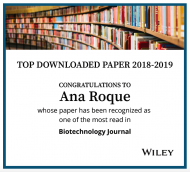
Top downloaded article

Our article was in the top 10% downloaded among work published between January 2018 and December 2019.

Poster presentation @ Virtual ACS Spring Meeting

The ACS Spring 2020 National Meeting & Expo, scheduled to happen on 22-26th March in Philadelphia, has been cancelled due to the COVID-19 pandemic. Even though we could not be physically present, we could still submit and present a poster, which can be seen here: https://doi.org/10.1021/scimeetings.0c02867

Matos, MJB, Pina AS, Roque ACA.  2020.  Rational design of affinity ligands for bioseparation. Journal of Chromatography A. (460871)
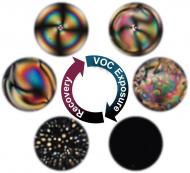
Esteves, C, Ramou E, Porteira ARP, Barbosa AJM, Roque ACA.  2020.  Seeing the Unseen: The Role of Liquid Crystals in Gas‐Sensing Technologies. Advanced Optical Materials. 1902117:1-29. AbstractPDF

Fast, real-time detection of gases and volatile organic compounds (VOCs) is
an emerging research field relevant to most aspects of modern society, from
households to health facilities, industrial units, and military environments.
Sensor features such as high sensitivity, selectivity, fast response, and low
energy consumption are essential. Liquid crystal (LC)-based sensors fulfill
these requirements due to their chemical diversity, inherent self-assembly
potential, and reversible molecular order, resulting in tunable stimuliresponsive soft materials. Sensing platforms utilizing thermotropic uniaxial
systems—nematic and smectic—that exploit not only interfacial phenomena,
but also changes in the LC bulk, are demonstrated. Special focus is given to
the different interaction mechanisms and tuned selectivity toward gas and
VOC analytes. Furthermore, the different experimental methods used to
transduce the presence of chemical analytes into macroscopic signals are discussed and detailed examples are provided. Future perspectives and trends
in the field, in particular the opportunities for LC-based advanced materials in
artificial olfaction, are also discussed.

New review article on liquid crystals

Our latest review has been published online in the most recent issue of the Advanced Optical Materials journal.

Roque, ACA, Fred A, Gamboa H.  2019.  Foreword, January 2019. BIODEVICES 2019 - 12th International Conference on Biomedical Electronics and Devices, Proceedings; Part of 12th International Joint Conference on Biomedical Engineering Systems and Technologies, BIOSTEC 2019. , Prague: SciTePress
Palma, SICJ, Esteves C, Pádua AC, Alves CM, Santos GMC, Costa HMA, Dionisio M, Gamboa H, Gruber J, Roque ACA.  2019.  Enhanced gas sensing with soft functional materials, May 2019. ISOEN 2019 - 18th International Symposium on Olfaction and Electronic Nose, Proceedings. , Fukuoka, Japan: Institute of Electrical and Electronics Engineers Inc. AbstractPDF

The materials described in this work result from the selfassembly of liquid crystals and ionic liquids into droplets,
stabilized within a biopolymeric matrix. These systems are
extremely versatile gels, in terms of composition, and offer
potential for fine tuning of both structure and function, as
each individual component can be varied. Here, the
characterization and application of these gels as sensing thin
films in gas sensor devices is presented. The unique
supramolecular structure of the gels is explored for molecular
recognition of volatile organic compounds (VOCs) by
employing gels with distinct formulations to yield
combinatorial optical and electrical responses used in the
distinction and identification of VOCs.