Biomolecular Engineering Lab

New paper about Poly(Ethylene Glycol)‐Based Hydrogels

Already a great start to 2021 - our new paper is out!
"Versatile and Tunable Poly(Ethylene Glycol)‐Based Hydrogels Crosslinked through the Ugi Reaction" shows the application of the four-component Ugi reaction as a powerful tool to quickly generate crosslinked gels with precise control in chemical composition. Get to know it: https://bit.ly/3bj2kye

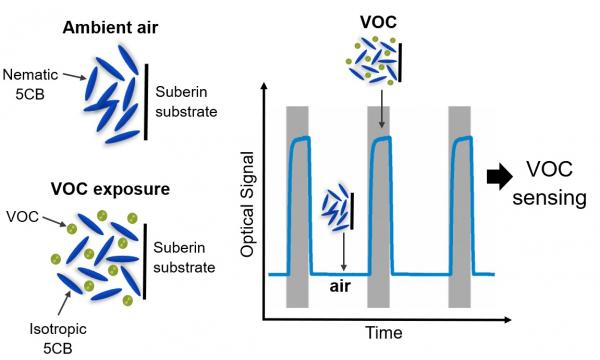
Rodrigues, R, Palma SICJ, Correia VJ, Padrao I, Pais J, Banza M, Alves C, Deuermeier J, Martins C, Costa HMA, Ramou E, Silva Pereira C, Roque ACA.  2020.  Sustainable plant polyesters as substrates for optical gas sensors. Materials Today Bio. 8:100083. AbstractPDF

The fast and non-invasive detection of odors and volatile organic compounds (VOCs) by gas sensors and electronic
noses is a growing field of interest, mostly due to a large scope of potential applications. Additional drivers for the
expansion of the field include the development of alternative and sustainable sensing materials. The discovery
that isolated cross-linked polymeric structures of suberin spontaneously self-assemble as a film inspired us to
develop new sensing composite materials consisting of suberin and a liquid crystal (LC). Due to their stimuliresponsive and optically active nature, liquid crystals are interesting probes in gas sensing. Herein, we report
the isolation and the chemical characterization of two suberin types (from cork and from potato peels) resorting to
analyses of gas chromatography–mass spectrometry (GC-MS), solution nuclear magnetic resonance (NMR), and Xray photoelectron spectroscopy (XPS). The collected data highlighted their compositional and structural differences. Cork suberin showed a higher proportion of longer aliphatic constituents and is more esterified than potato
suberin. Accordingly, when casted it formed films with larger surface irregularities and a higher C/O ratio. When
either type of suberin was combined with the liquid crystal 5CB, the ensuing hybrid materials showed distinctive
morphological and sensing properties towards a set of 12 VOCs (comprising heptane, hexane, chloroform,
toluene, dichlormethane, diethylether, ethyl acetate, acetonitrile, acetone, ethanol, methanol, and acetic acid).
The optical responses generated by the materials are reversible and reproducible, showing stability for 3 weeks.
The individual VOC-sensing responses of the two hybrid materials are discussed taking as basis the chemistry of
each suberin type. A support vector machines (SVM) algorithm based on the features of the optical responses was
implemented to assess the VOC identification ability of the materials, revealing that the two distinct suberin-based
sensors complement each other, since they selectively identify distinct VOCs or VOC groups. It is expected that
such new environmentally-friendly gas sensing materials derived from natural diversity can be combined in arrays
to enlarge selectivity and sensing capacity.

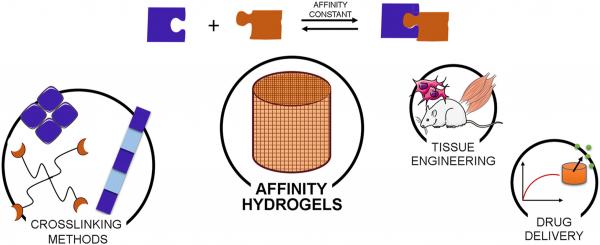
Fernandes, CSM, Pina AS, Roque ACA.  2021.  Affinity-triggered hydrogels: Developments and prospects in biomaterials science. Biomaterials. 268:120563.
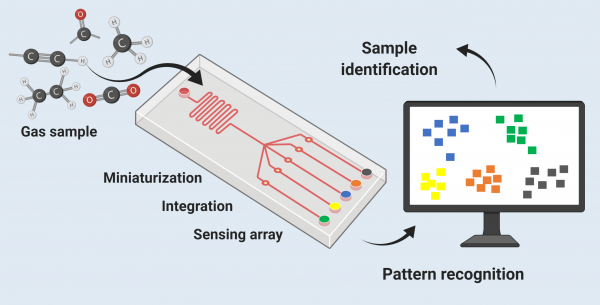
Rebordão, G, Palma SICJ, Roque ACA.  2020.  Microfluidics in Gas Sensing and Artificial Olfaction. Sensors . 20(20):5742. AbstractPDF

Rapid, real-time, and non-invasive identification of volatile organic compounds (VOCs)
and gases is an increasingly relevant field, with applications in areas such as healthcare, agriculture,
or industry. Ideal characteristics of VOC and gas sensing devices used for artificial olfaction include
portability and affordability, low power consumption, fast response, high selectivity, and sensitivity.
Microfluidics meets all these requirements and allows for in situ operation and small sample amounts,
providing many advantages compared to conventional methods using sophisticated apparatus such
as gas chromatography and mass spectrometry. This review covers the work accomplished so far
regarding microfluidic devices for gas sensing and artificial olfaction. Systems utilizing electrical
and optical transduction, as well as several system designs engineered throughout the years are
summarized, and future perspectives in the field are discussed.

New publication on cork-based sensors on the news

Our new paper is on the portuguese news - Go check it on Expresso website

New review article on affinity-triggered hydrogels

Our latest review is published in Biomaterials journal!

2020 European Researchers' Night

We are present in the 2020 European Researchers' Night.

2020

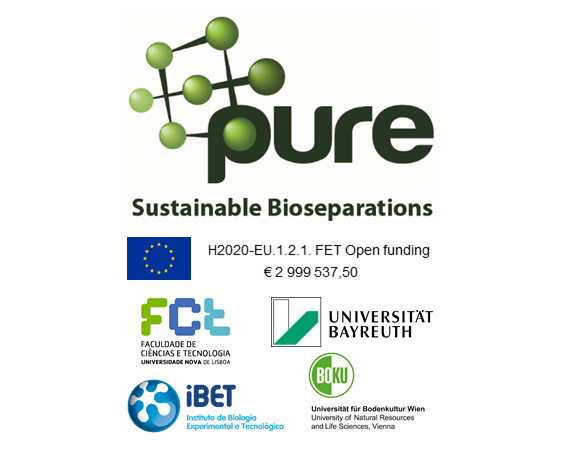
European Union Horizon 2020 FET Open funding awarded to Cecília Roque

Congratulations! The PURE project, coordinated by Prof. Cecília Roque, was awarded a financial funding by the European Union’s Horizon 2020 FET Open programme.

This project is coordinated by Prof. Cecília Roque within UCIBIO, FCT-NOVA but the consortium has the participation of three other institutions: Universität für Bodenkultur Wien (Austria), Universität Bayreuth (Germany) and Institute of Experimental and Technological Biology (Portugal). 

PURE Project gets award from European Union’s Horizon 2020

The PURE project, coordinated by Prof. Cecília Roque, was awarded a financial funding by the European Union’s Horizon 2020 FET Open programme.

Rita  Alves

Rita Alves

MSc Student

About me

I am very motivated to start my MSc project at the Biomolecular Engineering lab because it gives me the opportunity to develop the knowledge and skills that I've learned during my academic path in a practical scenario. Besides, I will work in a multidisciplinary group, providing me with a great opportunity to be in touch with different realities and learn about scientific areas I am not experienced. 


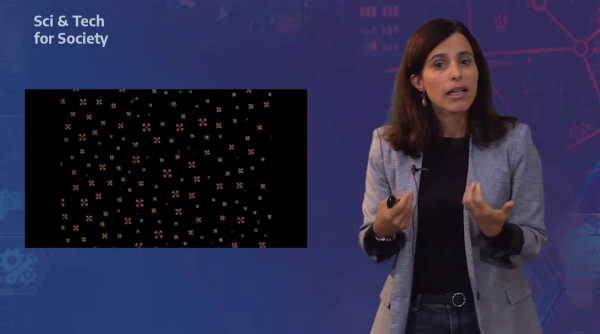
Oral talk at the Sci & Tech for Society webinar

Today, Prof. Cecília Roque gave an inspiring talk at the Sci & Tech for Society webinar!

Carlos  Costa

Carlos Costa

PhD Student

About me

I aim to employ, to the best of my ability, my knowledge and soft skills in cell and molecular biology, biochemistry, bioinformatics and nanotechnology, acquired during both my Bachelor and Master degrees, in a multidisciplinary approach towards developing novel biomimetic affinity reagents targeting the current pandemic virus, SARS-CoV-2. Therefore, potentially facilitating diagnosis and vaccine production, whilst also gaining experience in bioengineering and bioseparations.

New review on microfluidics in gas sensing

Our latest review has been published in a special issue “Gas Sensing Materials” of the MDPI open access journal Sensors.

This is a detailed overview on the use of microfluidic devices for gas sensing technologies. It summarizes different system designs using electrical and optical transduction and engineered throughout the years.

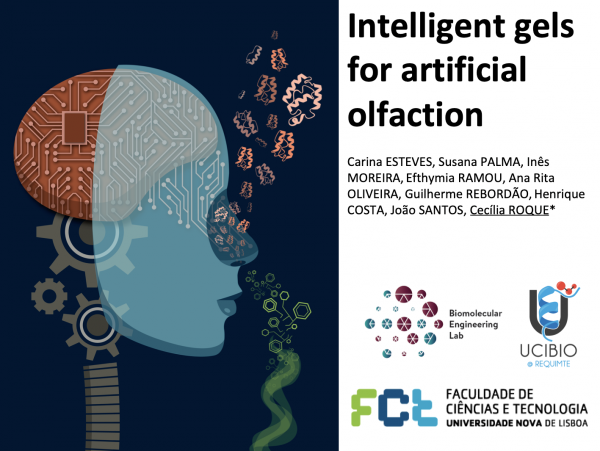
Presentation at NICE 2020 conference

Today, Prof. Cecília Roque presented our work "Intelligent gels for artificial olfaction" in NICE 2020 Online International Conference (https://www.nice-conference.com/). This is in the scope of #SCENT_project funded by the European Research Council.

PURE project

Scalable biotechnology for high performance bioseparation processes

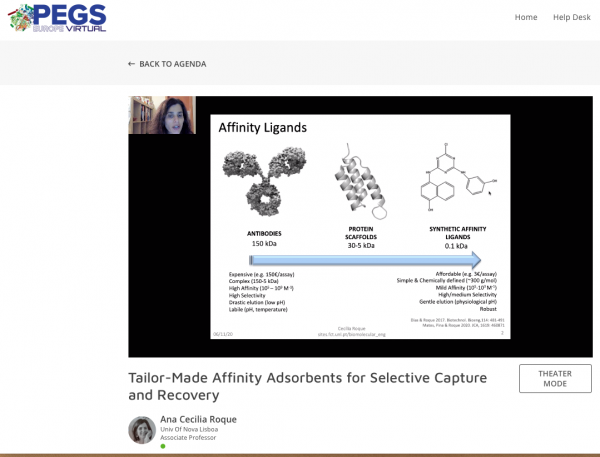
Bioseparation is a critical step in biopharmaceutical manufacturing. It employs polymeric adsorbents decorated with affinity ligands to increase the selective capture of target biological products.

Welcome to the team, Joana!

This week, we welcome Joana to our lab! She holds a bachelor in Biochemistry from FCT NOVA and is now doing the final thesis within the MSc in Biotechnology.

Joana will be working in "Odorant-binding proteins for artificial olfaction and fast diagnostics" within the #SCENT_project. Her main goal is to learn more about the world of biosensors as an emergent technology and what they could bring to mankind.

Joana  Calvário

Joana Calvário

MSc Student

About me

I’ve always been interested and curious about how the little molecules in our body work in symphony in order for us live. Biotechnology not only teaches me about that whole World, but it also allows me to use that knowledge to apply in biological and artificial methods. With these methods, I hope to help the environment and the people with all sorts of problems.


Cátia  Soares

Cátia Soares

MSc Student

About me

I'm motivated to study Biotechnology because this science can develop many applications that can improve the quality of people's lives.


Current Position

MSc. Student in Biotechnology at FCT-NOVA. Project title: “Marine based proteins for stimuli responsive materials


Welcome to the team, Cátia!

New year, new beginnings! Cátia started in our lab on the 1st September. She holds a bachelor in Biochemistry and is now doing the final thesis within her MSc in Biotechnology, both in FCT-NOVA.