Biomolecular Engineering Lab

Quick tip for biomaterials science

Publishing your #biomaterials research #openaccess can help accelerate discovery in a highly interdisciplinary community, says Guest Editor Kimberly Hamad Schifferli for our upcoming Biomaterials Collection. Submit your research now!

1st Internal Symposium of the Nano Initiative

Earlier this month Prof. Cecilia Roque visited New York City to attend the first internal symposium of the Nano Initiative as an invited guest along with Gonen and Nurit Ashkenasy.

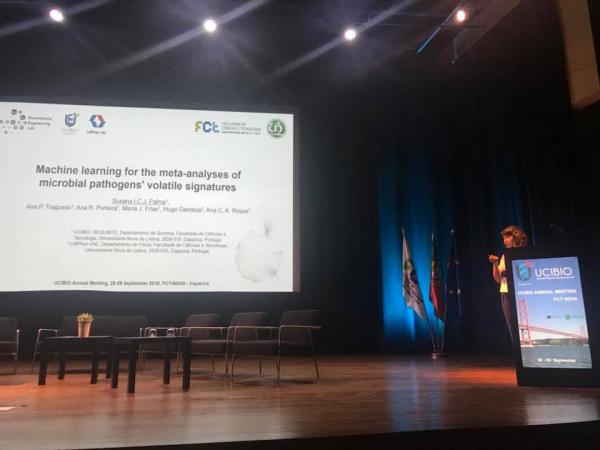
UCIBIO annual meeting 2018

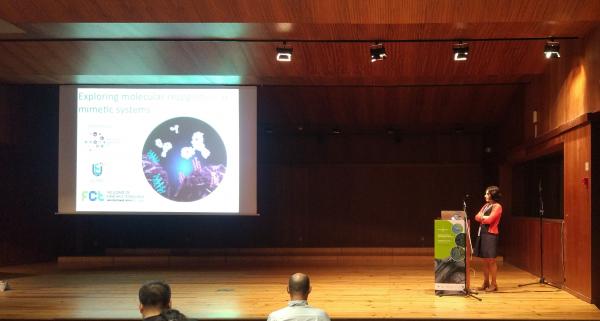
The second edition of the UCIBIO meeting took place at FCT-NOVA, where Post-doc Susana Palma has presented her most recent work entitled "Machine learning for the meta-analyses of microbial pathogens' volatile signatures".

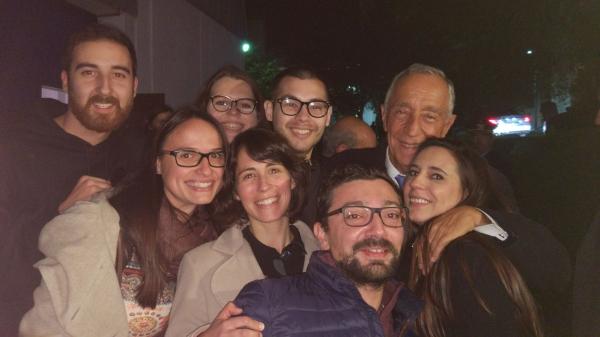
President of Republic of Portugal visit at FCT

During a visit to our campus some elements of our group were able to catch with the President Marcelo Rebelo de Sousa and take the iconic selfie.

Seminars at Chemistry Department

Some of our Post-docs were part of the short talks organized by LUPA, in our department. Here is the themes approached and the contribution of our team to the event:

Arménio J. Moura Barbosa, Biomolecular Engineering Lab (UCIBIO), "Computational and experimental chemistry, a strong friendship in drug discovery", Post-doc Scientific Short Talks @ FCT NOVA, February 2018, University NOVA of Lisbon, Portugal.

ESBES 2018

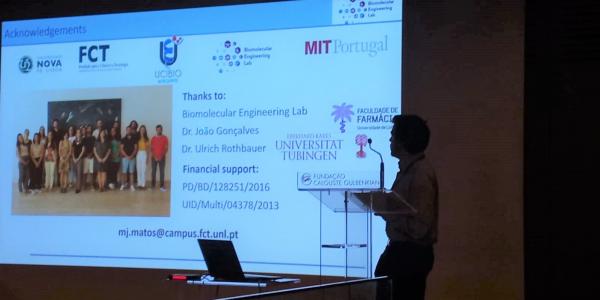
Our laboratory was present at the ESBES 2018 conference which was held in Lisbon from 9-12th September. Some of our member attending presented their work, namely:

Manuel Matos, PhD student from our lab, gave an oral communication of his work entitled "Petasis-Ugi affinity ligands as alternative tools for antibody purification".

II Symposium of the Biomolecular Engineering Lab + Group activity

The II Symposium of the Biomolecular Engineering Lab was held on  25th-27th July at FCT NOVA. During these days the researchers and collaborators of the laboratory had the chance to present the work developed during the year, as well as to hear inspiring talks from invited researchers from other institutes about their research projects.

This year Gonçalo Teixeira and Manuel Matos were the event organizers.

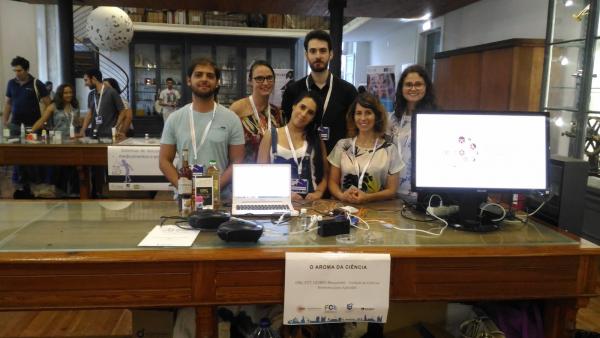
NEI 2018 - Noite europeia dos Investigadores

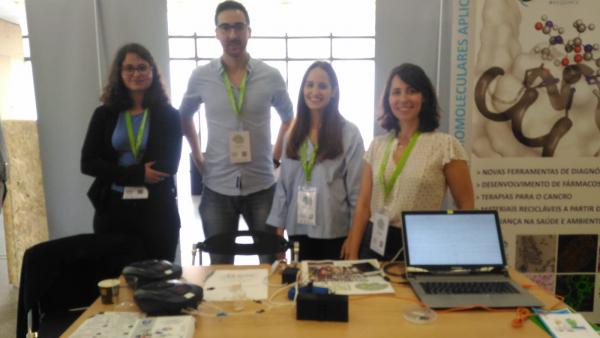
The Biomolecular Engineering Lab was present in "Noite dos Investigadores 2018", in the Natural History Museum, in Lisbon, with the subject "O Aroma da Ciência". 

Maugeri, G, Lychko I, Sobral R, Roque ACA.  2019.  Identification and Antibiotic-Susceptibility Profiling of Infectious Bacterial Agents: A Review of Current and FutureTrends. Biotechnology Journal. 14(1700750) AbstractPDFWebsite

Antimicrobial resistance is one of the most worrying threats to humankind with extremely high healthcare costs associated. The current technologies used in clinical microbiology to identify the bacterial agent and profile antimicrobial susceptibility are time‐consuming and frequently expensive. As a result, physicians prescribe empirical antimicrobial therapies. This scenario is often the cause of therapeutic failures, causing higher mortality rates and healthcare costs, as well as the emergence and spread of antibiotic resistant bacteria. As such, new technologies for rapid identification of the pathogen and antimicrobial susceptibility testing are needed. This review summarizes the current technologies, and the promising emerging and future alternatives for the identification and profiling of antimicrobial resistance bacterial agents, which are expected to revolutionize the field of clinical diagnostics.

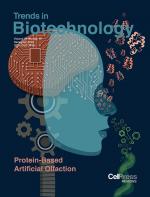
Barbosa, AJM, Oliveira AR, Roque ACA.  2018.  Protein- and Peptide-Based Biosensors in Artificial Olfaction. Trends in Biotechnology. 36(12):1244-1258. AbstractPDFWebsite

Animals’ olfactory systems rely on proteins, olfactory receptors (ORs) and
odorant-binding proteins (OBPs), as their native sensing units to detect odours.
Recent advances demonstrate that these proteins can also be employed as
molecular recognition units in gas-phase biosensors. In addition, the interactions
between odorant molecules and ORs or OBPs are a source of inspiration
for designing peptides with tunable odorant selectivity. We review recent
progress in gas biosensors employing biological units (ORs, OBPs, and peptides)
in light of future developments in artificial olfaction, emphasizing examples
where biological components have been employed to detect gas-phase
analytes.

Inês  Padrão

Inês Padrão

PhD Student

UCIBIO, REQUIMTE, Faculdade de Ciências e Tecnologia, Universidade Nova de Lisboa 2829-516 Caparica, Portugal Gab 523

  • p: +351 212 949 624 (ext 10984)
  • email

Current Position

PhD Student in Biotechnolgy

Project title: "Development of bio-based and sustainable materials from polar cephalopods"

Research Project

Sea2See Project


Former Positions

Jan 2020 – Jul 2021: Research Fellow in the ACCuseD project (PTDC/SAL-SER/30388/2017) in collaboration with UCIBIO-Porto.

Set 2018 – Nov 2019: MSC Student in the Sea2See project (PTDC/BII-BIO/28878/2017).

Ciência 2018

3rd of July we marked our presence once again in Ciência 2018, at Centro de Congressos de Lisboa, with our project SCENT.

Principal Investigator Prof. Cecília Roque gave a talk on the second day (4th July) exposing the work conducted in our facilities.

Expo FCT 2018

Once again FCT-NOVA received high school students from all around the country during the Expo FCT 2018. This initiative is a good way for students to have an ideia about what we do in our campus, and of course, the biomolecular engineering group was there!

Check some photos at: Click Here

UPCOMING ISSUE: Open Biomaterials Research

Call for Papers on “Open Biomaterials Research” at the multidisciplinary open-access journal PLOS ONE where Cecilia actas as an Academic Editor.  The Guest Editors for this project are Aldo R. Boccaccini, Kimberly Hamad-Schifferli, Michael McAlpine and Jie Song.

Visit at Cambridge Graphene Centre

Prof. Cecília Roque visited the Cambridge Graphene Centre, England. During this time she visited the facilities and got to know about the work developed at the center. She also gave a lecture where presented our work at the Biomolecular Engineering Lab.

You can find more about the Cambridge Graphene Centre clicking here!

Jornadas Ciceco 2018, Aveiro

Principal Investigator Prof. Cecília Roque was invited to speak and share her knowledge at Jornada Ciceco 2018 edition.

More info at: Click Here

Chem2Nature 2018, Porto

Our group was present at the summer school Chem2Nature 2018 in Porto, Portugal. Principal Investigator Prof. Cecília Roque was one of the invited speakers, where she spook about our work at the Biomolecular Engineering Lab.

Outreach at Colégio Verde Água

Little insight on our outreach at Colegio Verde Agua on 4 of April.

Take a look at:

https://www.facebook.com/colegioverdeagua/videos/1803601483276728/

PEPPERSchool (PEPTIDE AND PROTEIN ENGINEERING: FROM CONCEPTS TO BIOTECHNOLOGICAL APPLICATIONS)

Reminder of the international thematic school PEPPERSchool (PEPTIDE AND PROTEIN ENGINEERING: FROM CONCEPTS TO BIOTECHNOLOGICAL APPLICATIONS) that we are organizing in Carry-le-Rouet (France) on May 13-17th, 2018. This school will gather international experts from the field of peptide/protein chemistry as well as molecular biology methodologies.