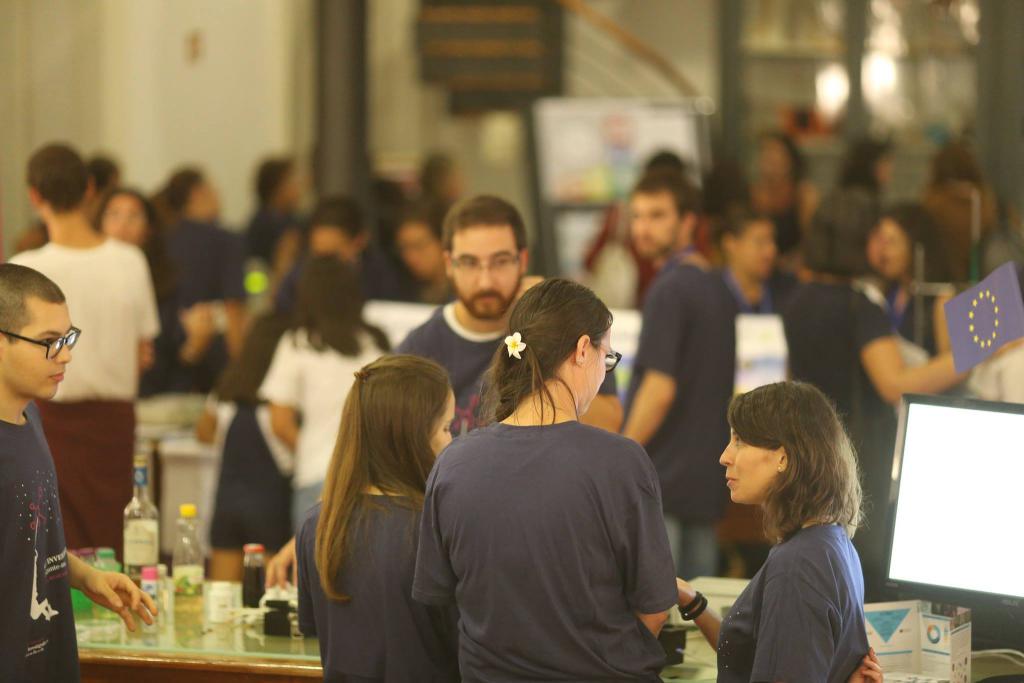
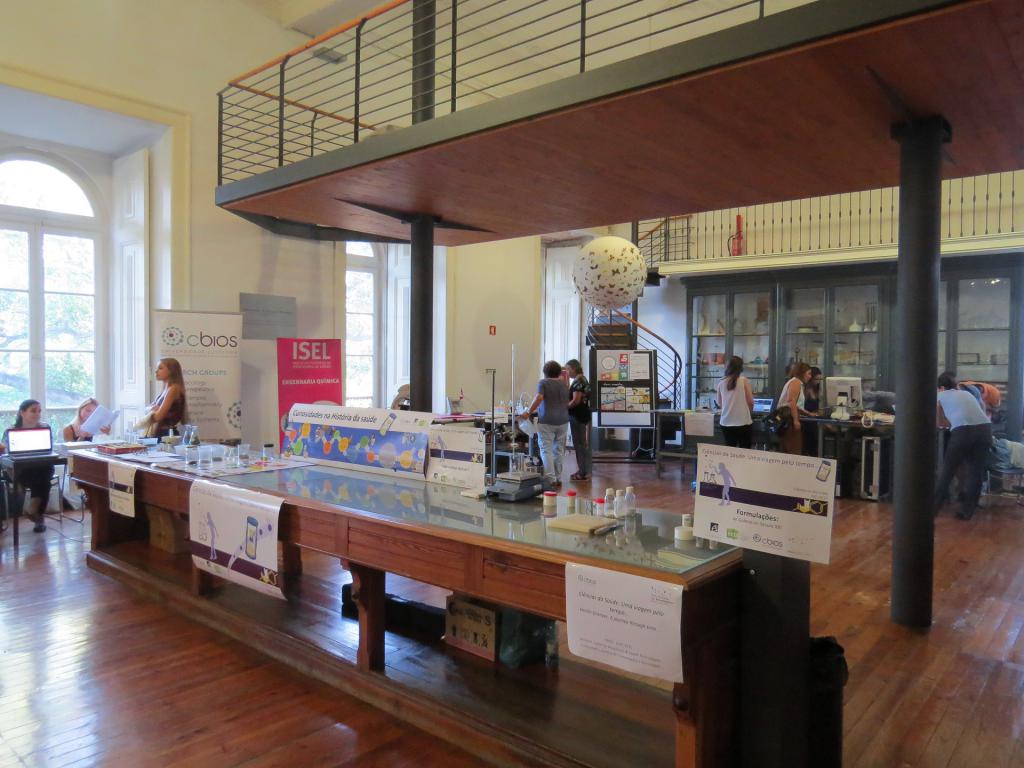
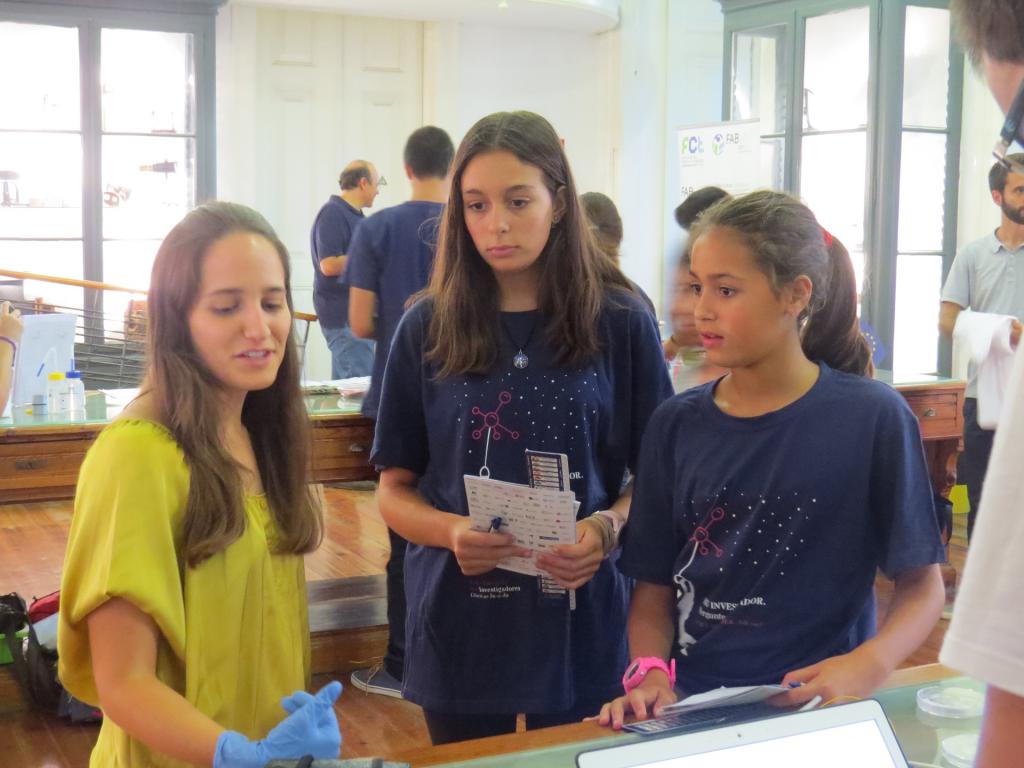
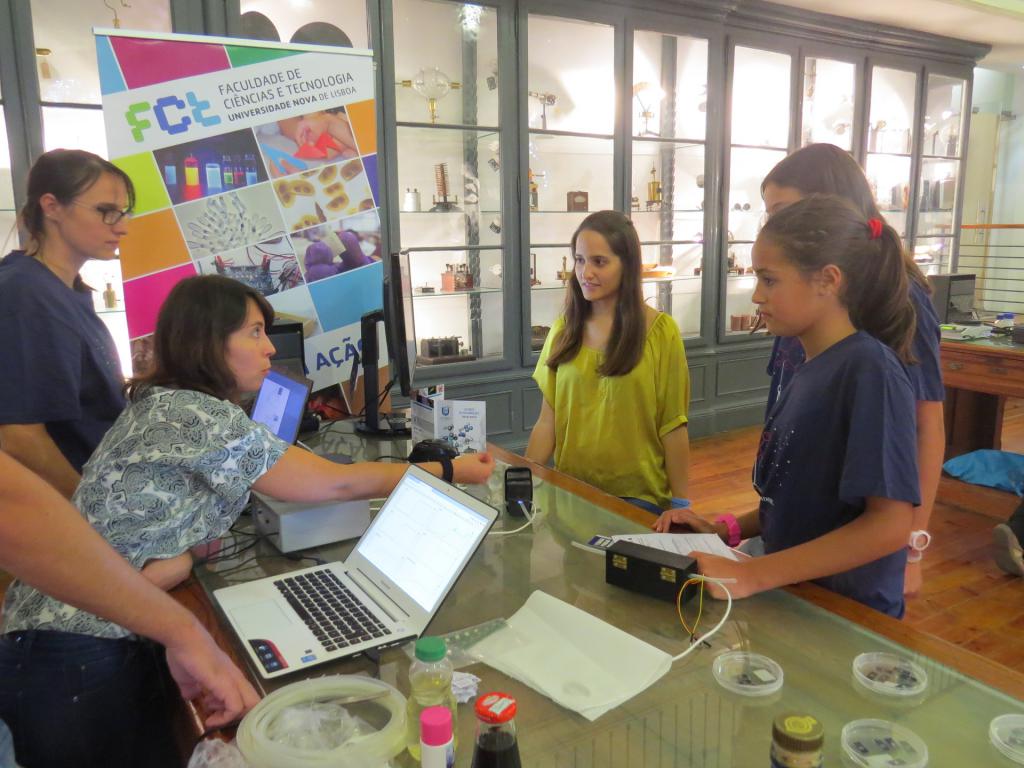
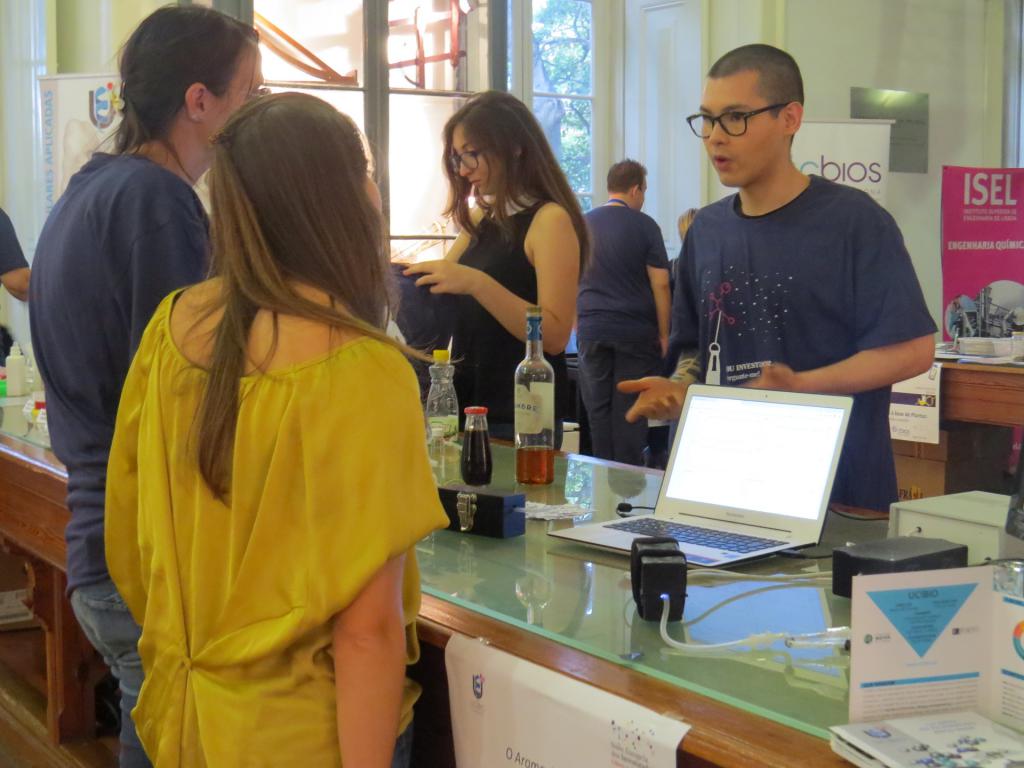
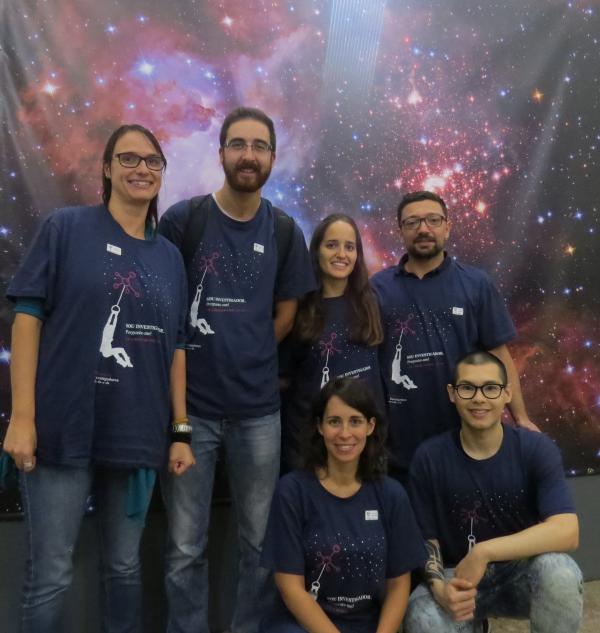
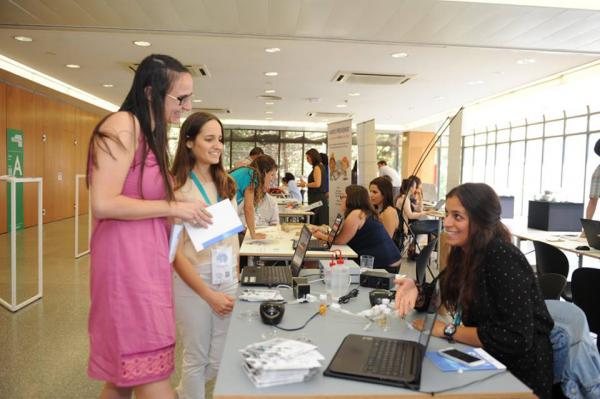
Once again our group was present in the European Researchers Night, that took place on 29th of September at the Natural History National Museum, Lisbon.
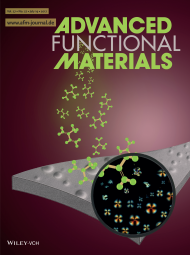
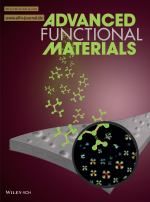
Our paper Tunable Gas Sensing Gels by Cooperative Assembly (more information on our Publications' page) was chosen for the cover of Advanced Functional Materials, Vol. 27, No. 27, July, 2017.
Special thanks to Marta Banza for the illustration!
Hussain, A, Semeano ATS, Palma SICJ, Pina AS, Almeida J, Medrado BF, Pádua ACCS, Carvalho AL, Dionísio M, Li RWC, Gamboa H, Ulijn RV, Gruber J, Roque ACA.
2017. Tunable Gas Sensing Gels by Cooperative Assembly. Advanced Functional Materials. 1700803:1–9. AbstractPDFWebsite
The cooperative assembly of biopolymers and small molecules can yield functional materials with precisely tunable properties. Here, the fabrication, characterization, and use of multicomponent hybrid gels as selective gas sensors are reported. The gels are composed of liquid crystal droplets self-assembled in the presence of ionic liquids, which further coassemble with biopolymers to form stable matrices. Each individual component can be varied and acts cooperatively to tune gels' structure and function. The unique molecular environment in hybrid gels is explored for supramolecular recognition of volatile compounds. Gels with distinct compositions are used as optical and electrical gas sensors, yielding a combinatorial response conceptually mimicking olfactory biological systems, and tested to distinguish volatile organic compounds and to quantify ethanol in automotive fuel. The gel response is rapid, reversible, and reproducible. These robust, versatile, modular, pliant electro-optical soft materials possess new possibilities in sensing triggered by chemical and physical stimuli.
Iana Lychko's main research interests are in the fields of Protein Engineering and Biomaterials. Currently, she is developing a new class of protein-based biomaterials for gas-sensing to control fish freshness. This work is within the Sea2See project which aims to explore the potential of cephalopode specific proteins called reflectins and their derivatives to form stimuli-responsive biomaterial.
Prof. Cecília Roque was invited to present the SCENT project in the program 90 seconds of science, which was broadcasted by Antena 1 on the 14th of March.
Affinity purification is one of the most powerful separation techniques extensively employed both at laboratory and production scales. While antibodies still represent the gold standard affinity reagents, others derived from non-immunoglobulin scaffolds emerged as interesting alternatives in particular for affinity purification. The lower costs of production, fast ligand development and high robustness are appealing advantages of non-immunoglobulin scaffolds. These have successfully been used in the affinity purification of relevant targets as antibodies, human serum albumin, transferrin and other biomarkers, as reviewed in this work. Furthermore, a critical assessment on the strengths, weaknesses, opportunities and threats related with the implementation of non-immunoglobulin scaffolds as ligands in affinity purification are discussed. This article is protected by copyright. All rights reserved.
This ERC Starting Grant has been awarded to Prof. Cecília Roque in 2014 to develop the urgently needed tools for rapid identification of bacterial infections.
Some elements of the group were on the 5th International Conference on Multifunctional, Hybrid and Nanomaterials that took place in the Lisbon Congress Center from 6 to 10 of March.
Also, Prof. Cecília Roque presented the poster on an affinity triggered MRI nanoprobe for pH-dependent cell labeling (for more information, please check the publication here).
Our challenge is to create simple mimetic versions of complex biomolecules, as proteins, while maintaining their function – for example the ability to recognize and bind to a target.