Biomolecular Engineering Lab

Workshop “ABC2 - Anything But Conventional Chromatography"

Our group is organizing the workshop “ABC2 - Anything But Conventional Chromatography", which will focus on less conventional methods for the purification of biological products and is aimed for PhD students, post-doctoral researchers, principal investigators and any professionals from academia and industry wishing to learn and update their knowledge in the field of bioseparation applying packed-chromatography alternative methods.

The workshop will take place in Lisbon, from 22nd to 24th of November.

For more information, please visit:

Outreach in an elementary school

On the 7th of February, our group participated on the science week of an elementary school.
The outreach activities included different ways to show the presence of science in small dynamics to 200 children from 3 to 10 years old.

It was one full day of exciting activities with an excellent and fulfilling outcome.

Masters Mid-Conferences (Jornadas Intercalares de Mestrados)

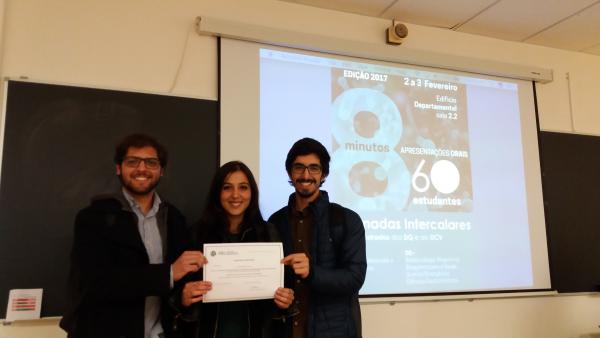
Our colleagues Gonçalo Abrantes, Gonçalo Teixeira and Marta Banza presented their masters' work at the Masters Mid-Conferences of the Chemistry and Life Science Departments (Jornadas Intercalares do DQV e DCV).

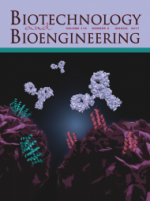
Biotechnology and Bioengineering Journal cover

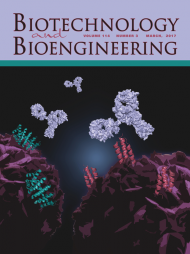
Our paper The Future of Protein Scaffolds as Affinity Reagents for Purification (more information on our Publications' page) was chosen for the cover of Biotechnology and Bioengineering, Vol. 114, No. 3, March, 2017.

Special thanks to Marta Banza for the illustration!

Rita  Oliveira

Rita Oliveira

PhD Student

Departamento de Química

REQUIMTE/CQFB

Lab 523

  • p: +351 212 949 624 (ext 10984)
  • email

Current Position

PhD Student from the MIT-Portugal Bioengineering Systems (FCT-NOVA)

Research Project


Hybrid Gels for Rapid Microbial Detection (SCENT)

Biotechnology Journal Cover

Our paper Retroviral particles are effectively purified on an affinity matrix containing peptides selected by phage-display (more information on our Publications' page) was chosen for the cover of Biotechnol. J 11 (12) 1471–1680 (2016) · Vol. 11 · December 2016

dos Santos, R, Carvalho AL, Roque ACA.  2017.  Renaissance of protein crystallization and precipitation in biopharmaceuticals purification. Biotechnology Advances. 35:–., Number 1: Elsevier Inc. AbstractWebsite

The current chromatographic approaches used in protein purification are not keeping pace with the increasing biopharmaceutical market demand. With the upstream improvements, the bottleneck shifted towards the downstream process. New approaches rely in Anything But Chromatography methodologies and revisiting former techniques with a bioprocess perspective. Protein crystallization and precipitation methods are already implemented in the downstream process of diverse therapeutic biological macromolecules, overcoming the current chromatographic bottlenecks. Promising work is being developed in order to implement crystallization and precipitation in the purification pipeline of high value therapeutic molecules. This review focuses in the role of these two methodologies in current industrial purification processes, and highlights their potential implementation in the purification pipeline of high value therapeutic molecules, overcoming chromatographic holdups.

Palma, SICJ, Fernandes AR, Roque ACA.  2016.  An affinity triggered MRI nanoprobe for pH-dependent cell labeling. RSC Adv.. 6:113503–113512., Number 114: Royal Society of Chemistry AbstractWebsite

The pH-sensitive affinity pair composed by neutravidin and iminobiotin was used to develop a multilayered Magnetic Resonance Imaging (MRI) nanoprobe responsive to the acidic pH of tumor microenvironment. The multilayer system was assembled on meso-2,3-dimercaptosuccinic acid-coated iron oxide magnetic nanoparticles (MNP), which convey negative MRI contrast enhancement properties to the nanoprobe. The outer stealth PEG-layer is altered in acidic media due to the disruption of interactions between neutravidin–iminobiotin. As a consequence, the positively charged inner layer is exposed and enhances interactions with cells. The nanoprobe uptake by HCT116 cells cultured in vitro under acidic conditions had a 2-fold increase compared to the uptake at physiological pH. The uptake difference is particularly clear in T2-weighted MRI phantoms of cells incubated with the nanoprobes at both pH conditions. This work sets the proof-of-concept of a MNP-based MRI nanoprobe targeting acidic tumor microenvironment through the use of a specific bio-recognition interaction that is pH-sensitive. This tumor targeting strategy is potentially applicable to the generality of tumors since the typical hypoxic conditions and high glycolysis rate in cancer cells create an acidic environment common to the majority of cancer types.

Batalha, ÍL, Roque ACA.  2016.  Phosphopeptide Enrichment Using Various Magnetic Nanocomposites: An Overview. Phospho-Proteomics. 1355(Methods in Molecular Biology):193–209. AbstractWebsite

Magnetic nanocomposites are hybrid structures consisting of an iron oxide (Fe3O4 /$\gamma$-Fe2O3 ) superparamagnetic core and a coating shell which presents affi nity for a specifi c target molecule. Within the scope of phosphopeptide enrichment, the magnetic core is usually fi rst functionalized with an intermediate layer of silica or carbon to improve dispersibility and increase specifi c area, and then with an outer layer of a phosphate-affi nity material. Fe3O4 -coating materials include metal oxides, rare earth metal-based compounds, immobilized-metal ions, polymers, and many others. This chapter provides a generic overview of the different materials that can be found in literature and their advantages and drawbacks.

Batalha, ÍL, Roque ACA.  2016.  Petasis-Ugi ligands: New affinity tools for the enrichment of phosphorylated peptides. Journal of Chromatography B: Analytical Technologies in the Biomedical and Life Sciences. 1031:86–93.: Elsevier B.V. AbstractWebsite

Affinity chromatography is a widespread technique for the enrichment and isolation of biologics, which relies on the selective and reversible interaction between affinity ligands and target molecules. Small synthetic affinity ligands are valuable alternatives due to their robustness, low cost and fast ligand development. This work reports, for the first time, the use of a sequential Petasis-Ugi multicomponent reaction to generate rationally designed solid-phase combinatorial libraries of small synthetic ligands, which can be screened for the selection of new affinity adsorbents towards biological targets. As a proof of concept, the Petasis-Ugi reaction was here employed in the discovery of affinity ligands suitable for phosphopeptide enrichment. A combinatorial library of 84 ligands was designed, synthesized on a chromatographic solid support and screened in situ for the specific binding of phosphopeptides binding human BRCA1C-terminal domains. The success of the reaction on the chromatographic matrix was confirmed by both inductively coupled plasma atomic emission spectroscopy and fluorescence microscopy. Three lead ligands were identified due to their superior performance in terms of binding capacity and selectivity towards the phosphorylated moiety on peptides, which showed the feasibility of the Petasis-Ugi reaction for affinity ligand development.

Batalha, IL, Zhou H, Lilley K, Lowe CR, Roque ACA.  2016.  Mimicking nature: Phosphopeptide enrichment using combinatorial libraries of affinity ligands. Journal of Chromatography A. 1457:76–87.: Elsevier B.V. AbstractWebsite

Phosphorylation is a reversible post-translational modification of proteins that controls a plethora of cellular processes and triggers specific physiological responses, for which there is a need to develop tools to characterize phosphorylated targets efficiently. Here, a combinatorial library of triazine-based synthetic ligands comprising 64 small molecules has been rationally designed, synthesized and screened for the enrichment of phosphorylated peptides. The lead candidate (coined A8A3), composed of histidine and phenylalanine mimetic components, showed high binding capacity and selectivity for binding mono- and multi-phosphorylated peptides at pH 3. Ligand A8A3 was coupled onto both cross-linked agarose and magnetic nanoparticles, presenting higher binding capacities (100-fold higher) when immobilized on the magnetic support. The magnetic adsorbent was further screened against a tryptic digest of two phosphorylated proteins ($\alpha$- and $\beta$-caseins) and one non-phosphorylated protein (bovine serum albumin, BSA). The MALDI-TOF mass spectra of the eluted peptides allowed the identification of nine phosphopeptides, comprising both mono- and multi-phosphorylated peptides.

Fernandes, CSM, dos Santos R, Ottengy S, Viecinski AC, Béhar G, Mouratou B, Pecorari F, Roque ACA.  2016.  Affitins for protein purification by affinity magnetic fishing. Journal of Chromatography A. 1457:50–58.: Elsevier B.V. AbstractWebsite

Currently most economical and technological bottlenecks in protein production are placed in the down-stream processes. With the aim of increasing the efficiency and reducing the associated costs, variousaffinity ligands have been developed. Affitins are small, yet robust and easy to produce, proteins derivedfrom the archaeal extremophilic “7 kDa DNA-binding” protein family. By means of combinatorial pro-tein engineering and ribosome display selection techniques, Affitins have shown to bind a diversity oftargets. In this work, two previously developed Affitins (anti-lysozyme and anti-IgG) were immobilizedonto magnetic particles to assess their potential for protein purification by magnetic fishing. The opti-mal lysozyme and human IgG binding conditions yielded 58 mg lysozyme/g support and 165 mg IgG/gsupport, respectively. The recovery of proteins was possible in high yield (≥95{%}) and with high purity,namely ≥95{%} and 81{%}, when recovering lysozyme from Escherichia coli supernatant and IgG from humanplasma, respectively. Static binding studies indicated affinity constants of 5.0 × 10⁴M−1and 9.3 × 10⁵M−1for the anti-lysozyme and anti-IgG magnetic supports. This work demonstrated that Affitins, which canbe virtually evolved for any protein of interest, can be coupled onto magnetic particles creating novelaffinity adsorbents for purification by magnetic fishing.

Fernandes, CSM, Castro R, Coroadinha AS, Roque ACA.  2016.  Small synthetic ligands for the enrichment of viral particles pseudotyped with amphotropic murine leukemia virus envelope. Journal of Chromatography A. 1438:160–170.: Elsevier B.V. AbstractWebsite

Retroviral vectors gained popularity toward other viral vectors as they integrate their genome into hosts' genome, a characteristic required for the modification of stem cells. However, the production of viable particles for gene therapy is hampered by the low ratio of infectious to non-infectious viral particles after purification, low titers and limited number of competent viral receptors. We have developed de novo two fully synthetic triazine-based ligands that can selectively bind retroviral particles pseudotyped with amphotropic murine leukemia virus envelope (AMPHO4070A). A 78-membered library of triazine-based ligands was designed in silico and was virtually screened against the modeled structure of the AMPHO4070A protein. Ligands displaying the highest energy of binding were synthesized on cross-linked agarose and experimentally tested. Adsorbents containing ligands A5A10 and A10A11 showed selectivity toward viral particles containing the target protein (VLP-AMPHO), binding 19 ± 5 $μ$g/g support and 47 ± 13 $μ$g/g support, respectively. The elution conditions for both ligands were mild and with high recovery yields (80-100{%}), in comparison with common purification practices. These results were based on a lab-scale experimental setting with VLP integrity being confirmed through TEM. In particular, the elution buffer containing 12 mM imidazole allowed the recovery of intact amphotropic viral particles.

TWO OPEN POSITIONS for Master holders

There are two OPEN POSITIONS in our group.

Please check OPEN POSITIONS

1. Open position in Biotechnology/Bioengineering:

http://www.eracareers.pt/opportunities/index.aspx?task=global&jobId=87201&lang=pt

Pina, AS, Carvalho S, Dias AMGC, Guilherme M, Pereira AS, Caraça LT, Coroadinha AS, Lowe CR, Roque ACA.  2016.  Tryptophan tags and de novo designed complementary affinity ligands for the expression and purification of recombinant proteins. Journal of Chromatography A. 1472:55–65. AbstractWebsite

A common strategy for the production and purification of recombinant proteins is to fuse a tag to the protein terminal residues and employ a “tag-specific” ligand for fusion protein capture and purification. In this work, we explored the effect of two tryptophan-based tags, NWNWNW and WFWFWF, on the expression and purification of Green Fluorescence Protein (GFP) used as a model fusion protein. The titers obtained with the expression of these fusion proteins in soluble form were 0.11 mg ml−1 and 0.48 mg ml−1 for WFWFWF and NWNWNW, respectively. A combinatorial library comprising 64 ligands based on the Ugi reaction was prepared and screened for binding GFP-tagged and non-tagged proteins. Complementary ligands A2C2 and A3C1 were selected for the effective capture of NWNWNW and WFWFWF tagged proteins, respectively, in soluble forms. These affinity pairs displayed 106 M−1 affinity constants and Qmax values of 19.11 ± 2.60 ug g−1 and 79.39 ug g−1 for the systems WFWFWF AND NWNWNW, respectively. GFP fused to the WFWFWF affinity tag was also produced as inclusion bodies, and a refolding-on column strategy was explored using the ligand A4C8, selected from the combinatorial library of ligands but in presence of denaturant agents.

Congratulations to our master students!

Our coleagues Carina Figueiredo, Filipa Trovão and Ana Patrícia Traguedo have defended their MSc thesis during this month.

PostDoctoral Researcher

There is one Research Fellowship for a PostDoc available in our lab - Design, assemble and operate a new device for non-invasive detection of bacterial infections. Deadline 6th November 2016.

Please find more information here:

http://www.eracareers.pt/opportunities/index.aspx?task=global&jobId=86025

Or here:

ONE OPEN POSITION - PostDoc in Microbiology

There is one Research Fellowship for a PostDoc in MICROBIOLOGY available in our lab

Deadline for application: 6th November 2016.

Expected start date: 1st December 2016

Fellowship duration: 12 months

Salary: 1495€ (plus national social security)

The research aim is to develop methods for the non-invasive detection of bacterial infections.

European Researchers Night

Our group was present in the European Researchers Night, that took place on 30th of September at the Natural History National Museum, Lisboa.

Workshop on Computational Protein Design for Biotech Applications

The first edition of the Workshop on Computational Protein Design for Biotech Applications took place between 13th and 15th of September, at FCT NOVA.

During the course, participants debated their own scientific issues with invited experts and explored the provided tools to analyze and integrate theoretical results during hands-on sessions.