Biomolecular Engineering Lab

ERA-IB Project Meeting in Ludwigshafen

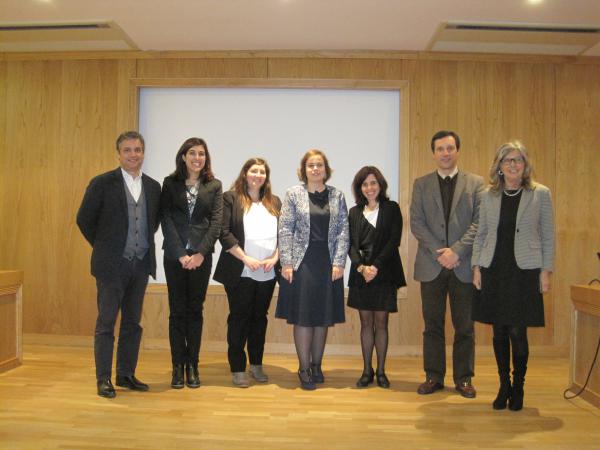
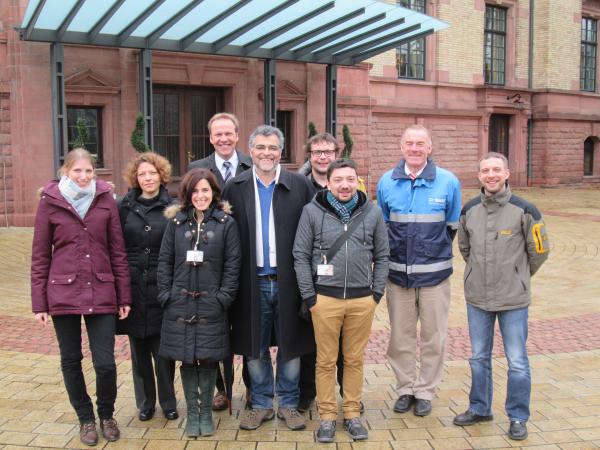
The CHImerASE project partners met past february at the BASF site in Ludwigshafen (Germany).

Congratulations Dr. Ana Margarida Dias!

Our colleague Margarida defended her PhD thesis!

She presented her work on the 8th January. We are very happy for her and wish her all the best!

Carina  Esteves

Carina Esteves

Post-Doc researcher Fellow

Departamento de Química

REQUIMTE/CQFB

Gab 523

  • p: +351 212 949 624 (ext 10984)
  • email

ResearcherID

ORCID 

Current Position

PhD Student from the MIT-Portugal Bioengineering Systems (FCT-NOVA)

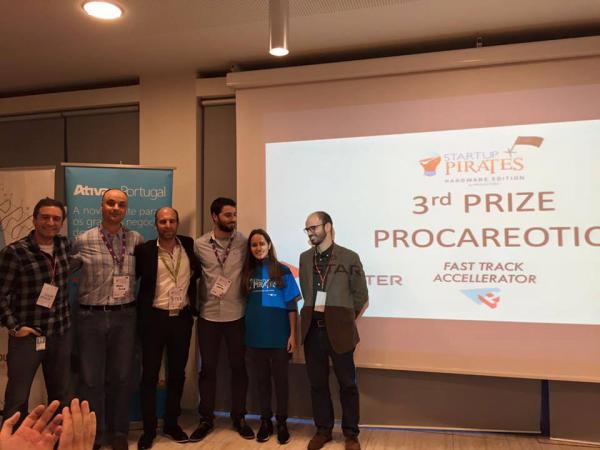
Congratulations to Ana Carolina Pádua for her award in Startup Pirates - Hardware Edition 2015!

Our colleague Ana Carolina Pádua has participated in the event Startup Pirates - Hardware Edition 2015 where her team developed a business idea for the electronic nose being developed at our lab. This initiative took place in Lisbon last December 12 to 19 and the final pitch of her team has been awarded the 3rd jury prize!

Dias, AMGC, Iranzo O, Roque ACA.  2015.  An in silico and chemical approach towards small protein production and application in phosphoproteomics. RSC Adv.. 5:19743-19751.: The Royal Society of Chemistry AbstractWebsite

The human Pin1 WW domain (hPin1_WW) is a 38 residue protein which specifically recognizes ligands rich in proline and phosphorylated in Ser and Thr residues. This work presents a protocol for the improved chemical synthesis and modification of this protein through automated microwave assisted synthesis combined with the incorporation of pseudoproline units in the protein sequence. After purification{,} the protein was characterized by Mass Spectrometry and Circular Dichroism spectroscopy with results comparable to the same WW domain chemically synthesized by other strategies or biologically expressed. The protein was further immobilized on a matrix and tested for the selective binding and mild elution of phosphorylated sequences at Ser{,} Thr and Tyr residues. These results suggest that hPin1_WW is a useful protein scaffold for the purification of phosphorylated species in pTyr and pSer{,} which can be easily produced and modified by chemical methods.

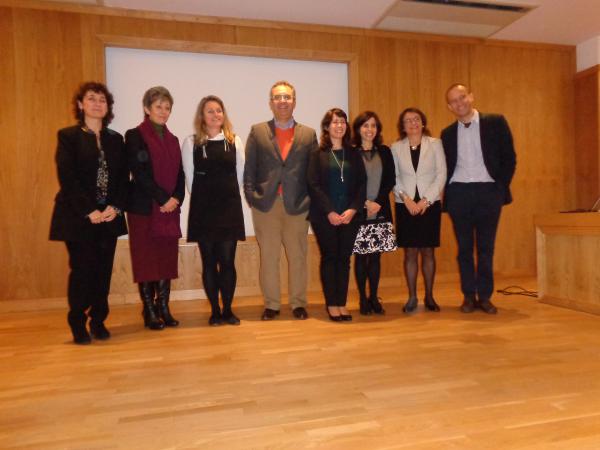
Congratulations Dr. Susana Palma!

Our colleague Susana defended her PhD thesis!

She presented her work on the 2nd December. We are very happy for her and wish her all the best!

Alves, BM, Borlido L, Rosa SASL, Silva MFF, Aires-Barros MR, Roque ACA, Azevedo AM.  2015.  Purification of human antibodies from animal cell cultures using gum arabic coated magnetic particles. Journal of Chemical Technology & Biotechnology. 90:838–846., Number 5: John Wiley & Sons, Ltd AbstractWebsite

BACKGROUND The emergence of monoclonal antibodies (mAbs) as new biopharmaceutical products requires the development of new purification methods that are not only effective but are able to reduce production costs. To address the problematic recovery of mAbs, gum arabic (GA) coated magnetic particles (MPs) were used for the purification of human antibodies from animal cells supernatants. RESULTS MPs were synthesized via co-precipitation and exhibited a spherical-like physical aspect, with an average hydrodynamic diameter of 473 nm and a zeta potential of –26 mV. The adsorption and elution of IgG on these adsorbents was thoroughly studied. Adsorption of human IgG was enhanced at pH 6, for which a qmax of 244 mg IgG g−1 MPs and Kd of 25 mg L−1 were obtained. Increasing salt concentrations at a basic pH (1 mol L−1 NaCl at pH 11) were found to improve the elution of bound IgG. The MPs were challenged with an artificial protein mixture containing human IgG, albumin, insulin and apo-transferrin. An overall yield of 84% was achieved, retrieving 92% of bound IgG. CONCLUSIONS MPs were successfully used for the capture of monoclonal antibodies from two distinct mammalian cell cultures, a Chinese hamster ovary (CHO) and a hybridoma cell culture supernatants. The elution yields were high, ranging between 84% and 94%, with overall yields ranging from 72% to 88%. Final purities of 85% were reached for hybridoma cell supernatants. © 2014 Society of Chemical Industry

Palma, SICJ, Carvalho A, Silva J, Martins P, Marciello M, Fernandes AR, del Puerto Morales M, Roque ACA.  2015.  Covalent coupling of gum arabic onto superparamagnetic iron oxide nanoparticles for MRI cell labeling: physicochemical and in vitro characterization. Contrast Media & Molecular Imaging. 10:320–328., Number 4 AbstractWebsite

Gum arabic (GA) is a hydrophilic composite polysaccharide derived from exudates of Acacia senegal and Acacia seyal trees. It is biocompatible, possesses emulsifying and stabilizing properties and has been explored as coating agent of nanomaterials for biomedical applications, namely magnetic nanoparticles (MNPs). Previous studies focused on the adsorption of GA onto MNPs produced by co-precipitation methods. In this work, MNPs produced by a thermal decomposition method, known to produce uniform particles with better crystalline properties, were used for the covalent coupling of GA through its free amine groups, which increases the stability of the coating layer. The MNPs were produced by thermal decomposition of Fe(acac)3 in organic solvent and, after ligand-exchange with meso-2,3-dimercaptosuccinic acid (DMSA), GA coating was achieved by the establishment of a covalent bond between DMSA and GA moieties. Clusters of several magnetic cores entrapped in a shell of GA were obtained, with good colloidal stability and promising magnetic relaxation properties (r2/r1 ratio of 350). HCT116 colorectal carcinoma cell line was used for in vitro cytotoxicity evaluation and cell-labeling efficiency studies. We show that, upon administration at the respective IC50, GA coating enhances MNP cellular uptake by 19 times compared to particles bearing only DMSA moieties. Accordingly, in vitro MR images of cells incubated with increasing concentrations of GA-coated MNP present dose-dependent contrast enhancement. The obtained results suggest that the GA magnetic nanosystem could be used as a MRI contrast agent for cell-labeling applications. Copyright © 2015 John Wiley & Sons, Ltd.

Fernandes, CSM, Gonçalves B, Sousa M, Martins DL, Barroso T, Pina AS, Peixoto C, Aguiar-Ricardo A, Roque ACA.  2015.  Biobased Monoliths for Adenovirus Purification. ACS Applied Materials & Interfaces. 7(12):6605-6612., Number 12 AbstractWebsite

Adenoviruses are important platforms for vaccine development and vectors for gene therapy, increasing the demand for high titers of purified viral preparations. Monoliths are macroporous supports regarded as ideal for the purification of macromolecular complexes, including viral particles. Although common monoliths are based on synthetic polymers as methacrylates, we explored the potential of biopolymers processed by clean technologies to produce monoliths for adenovirus purification. Such an approach enables the development of disposable and biodegradable matrices for bioprocessing. A total of 20 monoliths were produced from different biopolymers (chitosan, agarose, and dextran), employing two distinct temperatures during the freezing process (−20 °C and −80 °C). The morphological and physical properties of the structures were thoroughly characterized. The monoliths presenting higher robustness and permeability rates were further analyzed for the nonspecific binding of Adenovirus serotype 5 (Ad5) preparations. The matrices presenting lower nonspecific Ad5 binding were further functionalized with quaternary amine anion-exchange ligand glycidyltrimethylammonium chloride hydrochloride by two distinct methods, and their performance toward Ad5 purification was assessed. The monolith composed of chitosan and poly(vinyl) alcohol (50:50) prepared at −80 °C allowed 100% recovery of Ad5 particles bound to the support. This is the first report of the successful purification of adenovirus using monoliths obtained from biopolymers processed by clean technologies.

Pina, AS, Dias AMGC, Ustok FI, Khoury GE, Fernandes CSM, Branco RJF, Lowe CR, Roque ACA.  2015.  Mild and cost-effective green fluorescent protein purification employing small synthetic ligands. Journal of Chromatography A. 1418:83-93. AbstractWebsite

Abstract The green fluorescent protein (GFP) is a useful indicator in a broad range of applications including cell biology, gene expression and biosensing. However, its full potential is hampered by the lack of a selective, mild and low-cost purification scheme. In order to address this demand, a novel adsorbent was developed as a generic platform for the purification of \{GFP\} or \{GFP\} fusion proteins, giving \{GFP\} a dual function as reporter and purification tag. After screening a solid-phase combinatorial library of small synthetic ligands based on the Ugi-reaction, the lead ligand (A4C7) selectively recovered \{GFP\} with 94% yield and 94% purity under mild conditions and directly from Escherichia coli extracts. Adsorbents containing the ligand \{A4C7\} maintained the selectivity to recover other proteins fused to GFP. The performance of \{A4C7\} adsorbents was compared with two commercially available methods (immunoprecipitation and hydrophobic interaction chromatography), confirming the new adsorbent as a low-cost viable alternative for \{GFP\} purification.

Congratulations Professor Cecília Roque for her Habilitation!

Professor Cecília Roque got her new Academic Degree - Agregação (or Habilitation).
This is the highest obtainable academic degree, and was conceded to Prof. Cecilia after an outstanding presentation and lecture with an academic jury on November 10 and 11, 2015.

Congratulations master Aline Viecinski!

Our coleague Aline defended her MSc thesis!

She presented her work last 23rd October. We are very happy for her and wish her all the best!

Participation on the ESSIB 2015

Henrique F. Carvalho participated in the 2nd edition of the European Summer School on Industrial Biotechnology (ESSIB) 2015, held in Stuttgart, Germany, August 30 - September 4.

http://www.essib.eu/view/previous_stuttgart_2015.php

The participation was made whithin the scope of the ERA-IB 2 "CHImerASE" project.

Participation at the 3rd European Congress of Applied Biotechnology

Professor Roque presented a keynote lecture at the 3rd European Congress of Applied Biotechnology (ECAB3) in Nice, France, September 27 - October 1.

http://www.ecce2015.eu/ecab3

The talk was entitled "Synthetic and Biological Affinity Ligands for the Purification of Retroviral Particles".

Participation at the NANOBIOAPP 2015

Susana Palma presented her PhD work in the conference NANOBIOAPP2015 - Latest Advances on Nanomaterials for Biomedical Applications, held in Barcelona, Spain, September 21-23.

Participation at the Noite Europeia dos Investigadores 2015

The Biomolecular Engineering Group participated in the "Noite Europeia dos Investigadores" 25 September 2015, counting with the presence of the PI Cecilia Roque and all other scientists involved.

Carvalho, HF, Roque ACA, Iranzo O, Branco RJF.  2015.  Comparison of the Internal Dynamics of Metalloproteases Provides New Insights on Their Function and Evolution, 2015/09/23. PLoS ONE. 10(9):e0138118-.: Public Library of Science AbstractWebsite

Metalloproteases have evolved in a vast number of biological systems, being one of the most diverse types of proteases and presenting a wide range of folds and catalytic metal ions. Given the increasing understanding of protein internal dynamics and its role in enzyme function, we are interested in assessing how the structural heterogeneity of metalloproteases translates into their dynamics. Therefore, the dynamical profile of the clan MA type protein thermolysin, derived from an Elastic Network Model of protein structure, was evaluated against those obtained from a set of experimental structures and molecular dynamics simulation trajectories. A close correspondence was obtained between modes derived from the coarse-grained model and the subspace of functionally-relevant motions observed experimentally, the later being shown to be encoded in the internal dynamics of the protein. This prompted the use of dynamics-based comparison methods that employ such coarse-grained models in a representative set of clan members, allowing for its quantitative description in terms of structural and dynamical variability. Although members show structural similarity, they nonetheless present distinct dynamical profiles, with no apparent correlation between structural and dynamical relatedness. However, previously unnoticed dynamical similarity was found between the relevant members Carboxypeptidase Pfu, Leishmanolysin, and Botulinum Neurotoxin Type A, despite sharing no structural similarity. Inspection of the respective alignments shows that dynamical similarity has a functional basis, namely the need for maintaining proper intermolecular interactions with the respective substrates. These results suggest that distinct selective pressure mechanisms act on metalloproteases at structural and dynamical levels through the course of their evolution. This work shows how new insights on metalloprotease function and evolution can be assessed with comparison schemes that incorporate information on protein dynamics. The integration of these newly developed tools, if applied to other protein families, can lead to more accurate and descriptive protein classification systems.

Participation at the Prosense Workshop held in Lisbon - 16th July 2015

The Marie Curie Initial Training Network PROSENSE aims at training a new generation of young scientists in the interdisciplinary techniques and methods required to meet the major challenges in the development of diagnostic tools for prostate cancer.

New article published on Nanoscale journal

The article "A value-added exopolysaccharide as a coating agent for MRI nanoprobes", from Susana Palma and co-authors, was accepted in Nanoscale and is now online.

Palma, SI, Rodrigues CA, Carvalho A, Morales PM, Freitas F, Fernandes AR, Cabral JS, Roque ACA.  2015.  A value-added exopolysaccharide as a coating agent for MRI nanoprobes. Nanoscale. (7):14272-14283. AbstractWebsite

Fucopol, a fucose-containing exopolysaccharide (EPS) produced by the bacterium Enterobacter A47 DSM 23139 using glycerol as a carbon source, was employed as a new coating material for iron oxide magnetic nanoparticles (MNP). The coated particles were assessed as nanoprobes for cell labeling by Magnetic Resonance Imaging (MRI). The MNP were synthesized by a thermal decomposition method and transferred to aqueous medium by ligand-exchange reaction with meso-2,3-dimercaptosuccinic acid (DMSA). Covalent binding of EPS to DMSA-stabilized nanoparticles (MNP-DMSA) resulted in a hybrid magnetic-biopolymeric nanosystem (MNP-DMSA-EPS) with a hydrodynamic size of 170 nm, negative surface charge at physiological conditions and transverse to longitudinal relaxivities ratio, r2/r1, of 148. In vitro studies with two human cell lines (colorectal carcinoma - HCT116 - and neural stem/progenitor cells - ReNcell VM) showed that EPS promotes internalization of nanoparticles in both cell lines. In vitro MRI cell phantoms also showed superior performance of MNP-DMSA-EPS in ReNcell VM, for which iron dose-dependent MRI signal drop was obtained at relatively low iron concentrations (12 - 20 µg Fe/ml) and short incubation time. Furthermore, ReNcell VM multipotency was not affected by culture in the presence of MNP-DMSA or MNP-DMSA-EPS for 14 days. Our study suggests that Fucopol-coated MNP represent useful cell labeling nanoprobes for MRI.