New paper online!

Another great collaboration with the Biomolecular Engineering Lab
Santos, R.d., Iria, I., Manuel, A.M.,

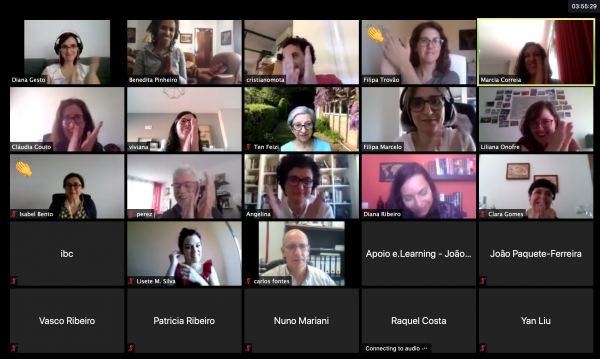
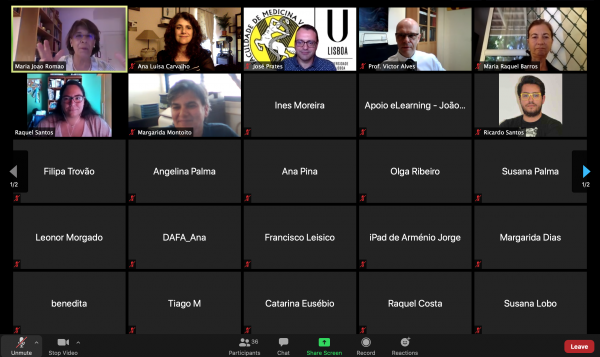
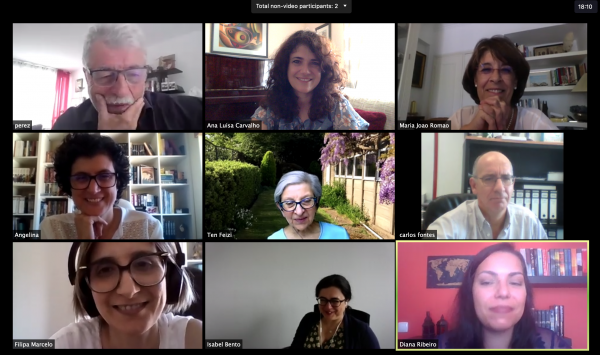
CICS.NOVA.UÉvora promove novo espaço de reflexão sobre COVID-19

CICS.NOVA.UÉvora cria espaço de debate e reflexões críticas em torno de diversas facetas inerentes ao surto da pandemia COVID-19, intitulado "Momentos-Covid-19: Reflexões críticas em tempos de Pandemia".

O primeiro momento de reflexão conjunta deu-se a 29 de Abril, em formato digital. Neste momento, o ponto de partida consistiu em analisar criticamente cenários sobre futuros prováveis, os quais podem emergir a médio prazo, partindo de uma visão de conjunto das respectivas dimensões política, económica, tecnológico científica, ambiental e sociocultural.
Vigilância digital em tempo de pandemia

Nos últimos dois meses temos ouvido muitos debates acerca de como será o mundo pós-pandemia. E em muitos deles a tecnologia assume um papel preponderante nesse futuro.
Tema particularmente atual e polémico com um dossier organizado por Luís Branco para a página esquerda.net.
Temas:
O telemóvel é que nos salvará? Olhe que não - Francisco Louçã
Screen New Deal: uma distopia tecnológica à boleia da pandemia - Naomi Klein
Covid e tecnologia: a vigilância é uma condição pré-existente - Sarah Chander
Rastreamento.pt é o site que faz pensar antes de instalar - Ricardo Lafuente

Congratulations, Doctor Raquel!

Congratulations to our most recent PhD, Doctor Raquel Santos, that successfully defended her Thesis, today!
Her thesis is entitled "Developing non-chromatographic strategies for biopharmaceuticals purifica

The impact of COVID-19 for people living and working in Europe

The impact of COVID-19 for people living and working in Europe: How can policymakers respond?

The first findings from Eurofound’s survey Living, working and COVID-19 launched on 9 April paint a stark picture, with people across the EU experiencing a deterioration in their economic situation and concerns for their financial future. EU citizens are generally reporting a decrease in their well-being but young people in particular are reporting much lower levels of mental well-being and higher levels of loneliness than other age groups.

COVID-19: do laboratório médico ao laboratório sociológico

Por Helena Serra (CICS.NOVA) in COVID-19 360 by NOVA (https://covid360.unl.pt/)

Global sociology and the coronavirus (ISA)

The coronavirus has brought science back to the centre, including in countries where populist leaders used to delegitimize it. Epidemiologists, medical doctors and biologists bring us hard facts: the pandemic progresses every day; it is far worse than a “strong flu” and takes thousands of lives on all continents. Social scientists have come up with facts that are as hard and as unquestionable: while the virus itself is a biological agent that may infect each of us, we are deeply unequal when confronted to it.

Coronavirus Knowledge Hub

Organizado pela Frontiers, este "hub" de conhecimento integra muitas disciplinas científicas diferentes.
A global challenge like the current COVID-19 pandemic can only be defeated when research results are rapidly and openly shared and all stakeholders work together – scientists, health workers, publishers, funders, policymakers, and government officials.

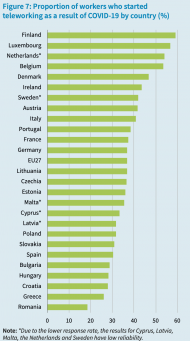
Workers who started teleworking as a result of COVID-19

There is a significant difference between Spain and Italy in terms of the proportion of workers who started teleworking as a result of COVID-19 by country (%).