Bio
in
WELCOME TO AASENS!
Deciphering Arsenic and Antimony Detoxification Enzymes for Biosensor Application
Arsenic (As) and antimony (Sb) are widely distributed toxic metalloids occurring in organic and inorganic forms in soil and groundwater. The global environmental impact is due to the presence of As and Sb in natural and anthropogenic environments that ultimately led to their introduction into the food chain. Inorganic As&Sb salts are extremely toxic and can severely affect human health, leading to a vast number of severe disorders including cancer, cardiovascular diseases and diabetes, among others. A study in 2020 established a global world prediction map of groundwater contaminated with As levels exceeding the WHO recommended limit (10ug/L). According to this study, more than 200 million people worldwide are potentially exposed to very high arsenic concentrations by drinking contaminated water. The following year the European Food Safety Authority (EFSA), revised the exposure to the chronic intake of As via diet and/or drinking water and updated the recommended limits. Water contamination with As is also threatening fish welfare. Arsenic is rapidly absorbed through the gills and skin, leading to its bioaccumulation in fish organs and tissues, thus posing a high risk to the consumers’ health. Regarding Sb, only recently its contamination and risk assessment studies were addressed but modern technologies have led to an increasing accumulation of its salts in the environment.
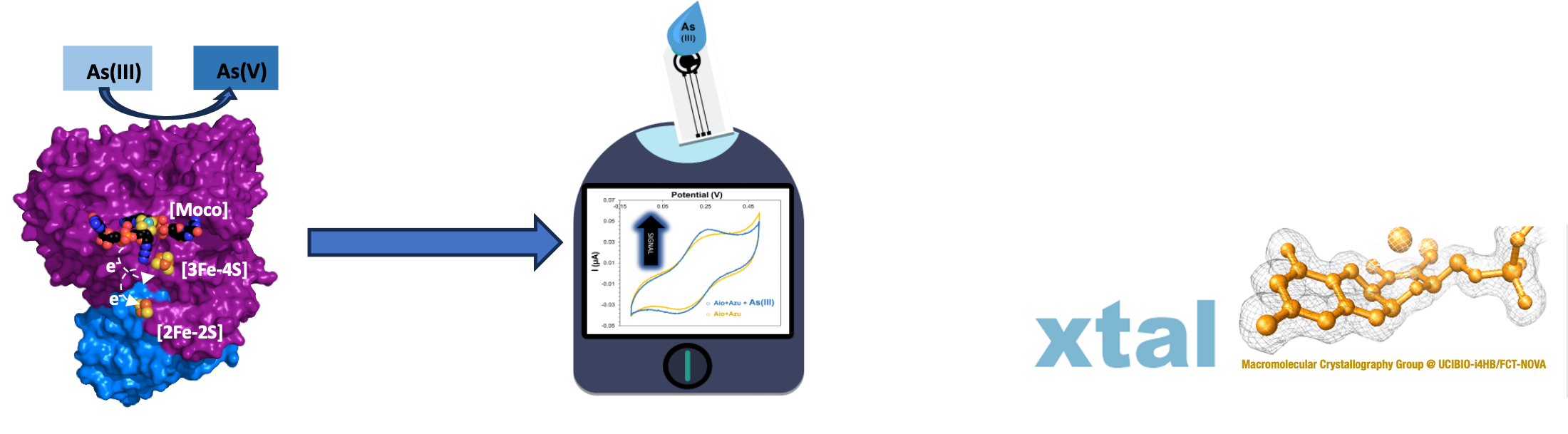
AASENS ambitious GOAL is to perceive As&Sb metabolizing enzymes from a structural and functional point of view, allying fundamental science with biotechnological applications to develop optimized enzyme-based biosensors for the quick and specific detection of both As(III) and Sb(III), either in water or seafood.